
Card Grading Companies: PSA vs BGS vs CGC vs SGC Value
Of all the questions we field at the counter, the most common one from new collectors is some version of: “Which of the card grading companies should I send my cards to?” The follow-up, when they walk in to pawn or sell, is: “Why does the same Charizard in two different slabs get two different offers?” Both questions deserve real answers, not the recycled forum talking points you see on Reddit. Here is how a pawnbroker who actually writes loans against slabs every week thinks about it.
Quick context: Advantage Pawn & Loan has been family-owned since 1989. We just opened our doors wide for sports cards, Pokemon, and TCG — details on our sports cards and TCG pawn page. This blog post is meant to help you make better grading decisions before you walk in.
The Four Graders That Actually Matter in 2026
There are dozens of grading companies, but the secondary market only respects four: PSA, BGS, CGC, and SGC. Anything outside this group — HGA, GMA, AGS, KSA, MNT — trades at raw-card prices, full stop. We will explain why at the bottom of this post. First, the four that matter.
PSA (Professional Sports Authenticator)
PSA is the 800-pound gorilla. Founded in 1991, owned today by Collectors, headquartered in Santa Ana, California. PSA grades on a 1-10 scale with half grades below 9 (there is no PSA 9.5) and uses a single composite grade — no subgrades on a standard label. Their PSA Auction Prices Realized database is the single most important pricing resource in the hobby because PSA-graded volume dwarfs everyone else combined. When buyers, sellers, and pawnbrokers comp a card, they comp PSA first.
Where PSA is strongest: Modern sports (Prizm, Bowman 1st, Topps Chrome), modern Pokemon, vintage baseball, vintage Pokemon WOTC. If your card is anything in those four buckets, PSA is the default and the slab will pull the deepest comps and the highest resale.
Where PSA is weaker: Vintage Magic: The Gathering (the market still respects BGS for Power 9 and Reserved List), and certain pre-war tobacco issues where SGC has built a strong reputation. Also, PSA’s turnaround times have been historically inconsistent, though their tier system has stabilized.
BGS (Beckett Grading Services)
Beckett, based in Texas, is the second-largest grader and the only one that publishes subgrades on the standard label: centering, corners, edges, and surface, each on a 1-10 scale, with the lowest subgrade typically driving (but not always equaling) the final composite. BGS also issues two coveted special labels: the gold-label Pristine 10 (all four subgrades 9.5 or 10 with stricter centering) and the Black Label 10 (all four subgrades a perfect 10). A BGS Black Label 10 is genuinely rarer than a PSA 10 in most modern populations and trades at a premium — sometimes a multiple — over a PSA 10 of the same card.
Where BGS is strongest: Modern Magic: The Gathering, vintage Magic (Black Lotus, Power 9), 1990s and early-2000s sports inserts and parallels where collectors want subgrades to verify quality. Also strong for high-end basketball Prizm color parallels.
Where BGS is weaker: Pure population velocity. A BGS 9 or 9.5 of a card that has 80,000 PSA 10s on the market is going to comp closer to a PSA 9 than a PSA 10, regardless of subgrades. Liquidity matters.
More on Beckett’s grading scale and methodology at bgs.com.
CGC (Certified Guaranty Company)
CGC’s roots are in comic-book grading and they expanded into trading cards aggressively starting in 2020. They are the youngest of the four majors in cards but they have moved fast, especially in vintage Pokemon WOTC and sealed product (CGC is a main option for graded sealed booster boxes). Their TCG slabs feature a clear front, a holographic label, and increasingly competitive turnaround times. Pricing has been catching up to PSA in vintage Pokemon high-grade specifically — the gap is smaller every quarter.
Where CGC is strongest: Vintage Pokemon (especially WOTC where the comic-grading rigor on surface inspection translates well), sealed booster boxes (CGC Sealed grading), modern Pokemon Japanese, and crossover comic/card collectors.
Where CGC is weaker: Modern sports cards. The market has not yet given CGC the same comp depth on Prizm/Bowman/Topps that PSA enjoys. A CGC 10 modern sports card usually comps below a PSA 10 of the same card.
SGC (Sportscard Guaranty)
SGC is the connoisseur’s choice for vintage. Their distinctive black tuxedo holder is well-known and well-respected. SGC tends to be slightly tougher than PSA on vintage centering and has a reputation for consistency that has earned them a loyal vintage collector base. Turnaround times have historically been faster than PSA.
Where SGC is strongest: Pre-war and early post-war vintage baseball (T206, 1933 Goudey, 1948 Leaf, 1952 Topps), vintage football (1948 Leaf, 1952 Bowman). For high-end vintage, SGC slabs comp at parity with or close to PSA, and sometimes above.
Where SGC is weaker: Modern. Almost no one sends modern sports or Pokemon to SGC at scale, so the comp data is thin and the market discount is real.
“Beckett Raw Card Review”
Worth a mention: Beckett also offers a service called Raw Card Review (RCR) where they certify a raw card’s likely grade without slabbing it. Useful for shipping insurance and for selling raw at a small premium, but at pawn we still treat the card as raw. The slab is what triggers slabbed-comp pricing.
Which Grader Holds the Most Value at Pawn?
Honest answer: it depends entirely on the card. Here is the cheat sheet we actually use behind the counter.
| Card type | Best grader for resale/pawn value |
|---|---|
| Modern sports (2018+) | PSA, then BGS Black Label premium tier |
| Vintage sports pre-1980 | PSA or SGC (near parity for high-end) |
| Vintage Pokemon WOTC | PSA (most comps) or CGC (closing fast) |
| Modern Pokemon | PSA, then CGC |
| Magic Power 9 / Reserved List | BGS, then PSA |
| Modern Magic / Yu-Gi-Oh | BGS or PSA |
| Sealed booster boxes | CGC Sealed (the main option) |
The most expensive mistake a new collector makes: sending a modern Pokemon Charizard to BGS hoping for a Black Label 10, getting a regular BGS 9.5, and finding out at sale or pawn that a PSA 10 of the same card would have netted more — at the same grading cost. Match the grader to the market.
Why “Off-Brand” Graders Get Discounted
HGA, GMA, AGS, KSA, MNT, ACE — these graders exist, they slab cards, and they have customers. But they share two problems:
- No comp depth. The secondary market on eBay, Goldin, PWCC, and Card Ladder does not have enough sales of these slabs to establish a reliable price. Without comps, every transaction is a negotiation from zero.
- No grading-standard trust. A PSA 10 means something specific because PSA has graded tens of millions of cards under a documented standard with population data. An HGA 10 means whatever HGA says it means, and the market has not validated it.
At pawn, this means we typically value off-brand-graded cards at raw-card pricing, not slabbed-comp pricing. That is not a snub; it is reality. If you are considering sending cards to a budget grader to save 15 dollars per card, do not. Send fewer cards to PSA, BGS, CGC, or SGC instead. The slab pays for itself only when the slab is one the market trusts.
Quick Decision Framework Before You Submit
- Is the card a modern sports rookie auto? PSA. Almost always.
- Is it vintage Pokemon WOTC, especially Charizard 1st Edition territory? PSA primarily, CGC if you want faster turnaround.
- Is it a Magic Power 9 or Reserved List staple? BGS, especially if you are gunning for subgrades on a clean copy.
- Is it pre-war baseball or 1952 Mantle territory? PSA or SGC; both are respected.
- Is it a sealed booster box? CGC Sealed is the main option.
- Is the card an off-brand slab already? Crack it (or do not), but expect raw-card pricing at pawn or resale.
What This Means When You Walk Into Our Shop
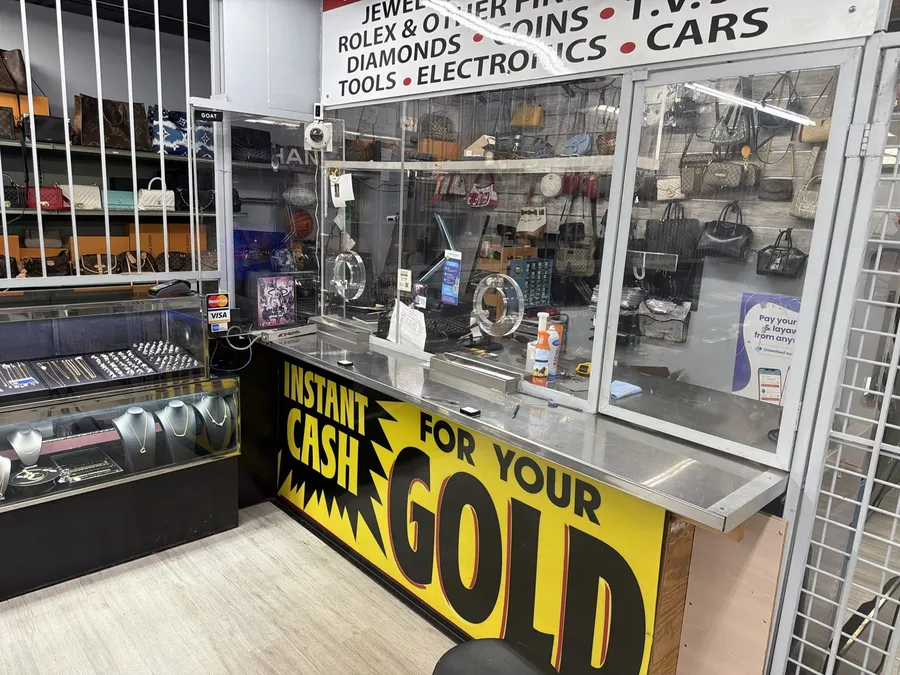
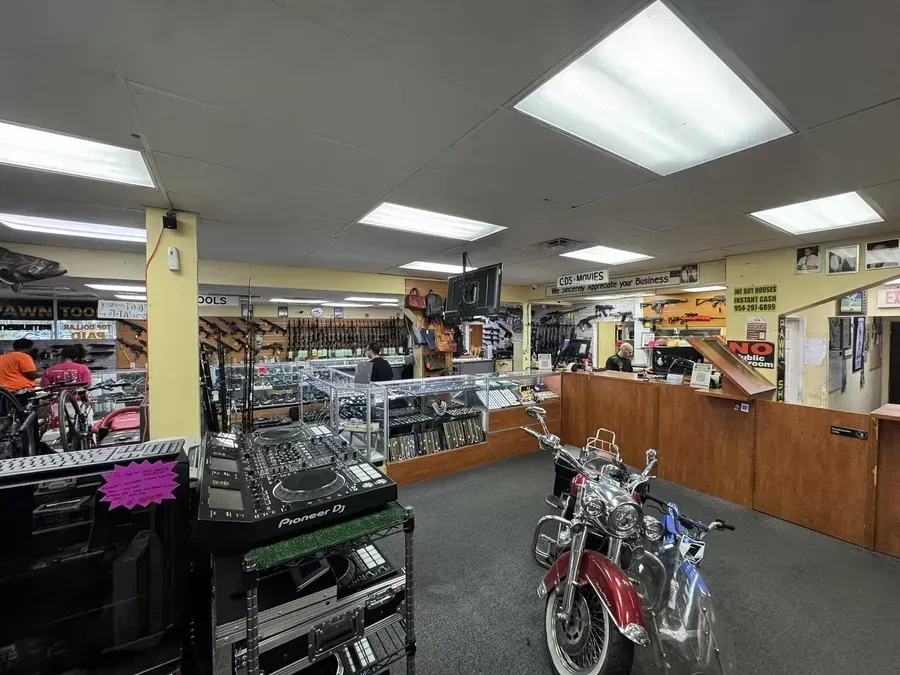
When you bring slabs to our Miami Gardens or West Park location, we verify the cert number with the grader, look at recent real sales, and quote you a number that reflects what the card actually nets after fees. We do not penalize CGC or SGC out of bias — we discount only when the market itself discounts them. When the market pays a BGS Black Label premium, so do we.
If you are debating whether to grade before you pawn or sell, bring the raw card in first and ask. Sometimes the answer is “grade it” (rare), but more often the math says “sell or pawn raw and skip the grading fee and the wait.” We will tell you straight.
Questions about your item? Call either store or send a few photos for a free quote.
Free quote · No obligation
Snap a photo, get an offer!
Send us a picture of your item and we'll text or call you with an estimate, usually the same business day. Then come in and get paid.
- Free appraisals, no appointment needed
- Ballpark estimates by phone
- No credit check, ever
- Hablamos español
Or send the photo on WhatsApp:
WhatsApp West ParkTwo locations
Visit us today!
 Hours
Miami Gardens
19948 NW 2nd Ave
Miami Gardens, FL 33169
| Monday | 9 AM – 6 PM |
| Tuesday | 9 AM – 6 PM |
| Wednesday | 9 AM – 5 PM |
| Thursday | 9 AM – 6 PM |
| Friday | 9 AM – 6 PM |
| Saturday | 10 AM – 5 PM |
| Sunday | Closed |
 Hours
West Park · Firearms & FFL
2031 S State Rd 7, Suite A&B
West Park, FL 33023
| Monday | 9 AM – 7 PM |
| Tuesday | 9 AM – 7 PM |
| Wednesday | 9 AM – 6 PM |
| Thursday | 9 AM – 7 PM |
| Friday | 9 AM – 7 PM |
| Saturday | 9 AM – 5 PM |
| Sunday | Closed |